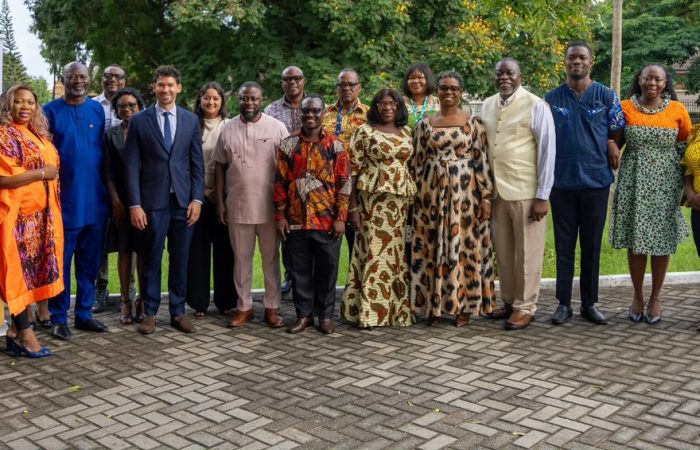
Women, Media and Change (WOMEC), under the “Nourish Ghana: Advocating for Increased Leadership to Combat Malnutrition” project, organised a Breakfast Meeting on 21st May 2026 at the Coconut Grove Regency Hotel in Accra under the theme “Strengthening Parliamentary Leadership and Domestic Financing for Maternal and Child Nutrition.” The meeting brought together approximately 30 participants, including Members of Parliament, representatives from the Ministry of Health (MoH), Ghana Health Service (GHS), National Development Planning Commission (NDPC), National Health Insurance Authority (NHIA), Ministry of Gender, Children and Social Protection (MoGCSP), academia, civil society organisations, nutrition experts, and media practitioners. The engagement sought to deepen parliamentary leadership and stakeholder collaboration towards sustainable financing, accountability, and policy implementation for maternal and child nutrition in Ghana.
Discussions throughout the meeting highlighted the growing urgency of addressing maternal and child malnutrition in Ghana. Participants were informed that approximately 68,517 children require treatment annually for Severe Acute Malnutrition (SAM), while only a small proportion currently receive treatment. It was also noted that between 37 and 63 per cent of pregnant women in Ghana are affected by anaemia, with less than one per cent currently accessing Multiple Micronutrient Supplements (MMS). Speakers repeatedly stressed that poor nutrition has significant implications for maternal mortality, child survival, cognitive development, educational outcomes, productivity, and national economic growth. Several presenters highlighted evidence suggesting that every dollar invested in nutrition can generate returns ranging between 16 and 23 dollars through improved human capital outcomes and reduced long-term healthcare costs.
A major focus of the meeting was the need for sustainable and predictable domestic financing for nutrition interventions, particularly Ready-to-Use Therapeutic Foods (RUTF) and MMS. Participants acknowledged that Ghana has already established important policy and technical foundations, including updated Community-based Management of Acute Malnutrition (CMAM) guidelines, trained health personnel, integration into national health information systems, and regulatory approvals. However, financing and implementation gaps continue to limit access to essential nutrition services and commodities. Discussions therefore centred on the need to institutionalise nutrition financing within Ghana’s domestic systems rather than relying predominantly on fragmented and donor-dependent arrangements.
The meeting also examined opportunities presented by Ghana’s commitments under the 2025 Paris Nutrition for Growth (N4G) Summit and the recent uncapping of the National Health Insurance Levy (NHIL). Presenters and discussants stressed that Ghana currently has an important policy window to translate nutrition commitments into concrete budgetary allocations and sustainable financing mechanisms. Particular attention was given to the need to integrate RUTF and MMS into the NHIS reimbursement and benefits package, strengthen parliamentary oversight, and establish protected financing mechanisms for essential nutrition commodities. Participants also explored innovative financing options such as ring-fenced taxes, DACF allocations, blended financing arrangements, and local manufacturing of nutrition commodities.
Members of Parliament present at the meeting expressed strong commitment towards advancing maternal and child nutrition financing within Parliament. Parliamentarians pledged to support advocacy efforts, strengthen oversight, and engage relevant ministries and agencies on sustainable financing pathways for nutrition interventions. Discussions also generated proposals for the establishment of a cross-party parliamentary nutrition caucus or champions group to sustain advocacy and accountability efforts. In addition, several speakers emphasised the importance of stronger multi-sectoral coordination involving health, gender, agriculture, education, social protection, local governance, academia, civil society organisations, and the media. Calls were also made for the establishment of a National Nutrition Council or coordinating body to improve national oversight and policy coherence on nutrition issues.
The meeting further highlighted the strong linkages between maternal nutrition, family planning, anaemia prevention, and maternal mortality reduction. Participants stressed that improving women’s health and nutritional status is essential for achieving broader national goals relating to gender equality, women’s empowerment, and sustainable development. Stakeholders therefore called for intensified public education, stronger community-level interventions, and increased investment in preventive nutrition approaches.
Evaluation feedback from participants showed overwhelmingly positive responses to the meeting. Participants particularly appreciated the quality of presentations, the engagement of Parliamentarians and technical experts, and the practical focus on financing and implementation challenges. Respondents also called for sustained advocacy, stronger parliamentary engagement, and continued stakeholder collaboration to ensure that commitments discussed during the meeting translate into concrete policy and financing actions.
Overall, the breakfast meeting served as an important platform for strengthening dialogue, collaboration, and political commitment towards improving maternal and child nutrition outcomes in Ghana. The discussions reinforced the urgent need for sustainable financing, stronger accountability mechanisms, and coordinated national action to ensure that nutrition remains central to Ghana’s health and development agenda.