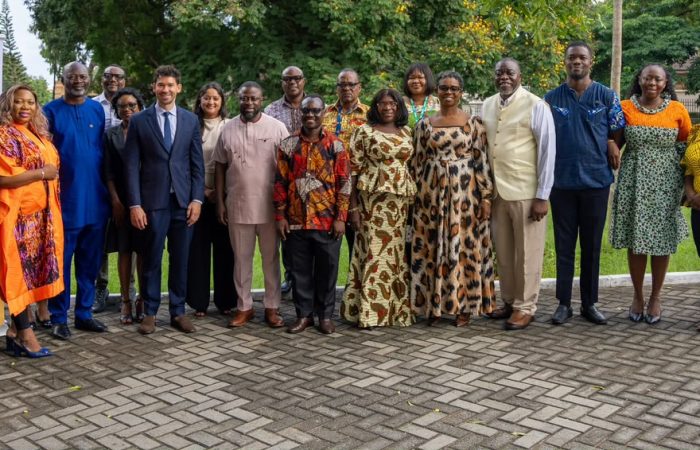
Accra, Ghana | October 2, 2026
For pregnant women and young children, access to essential nutrition can make a lasting difference to their health, development and future opportunities. Yet, ensuring that these services reach everyone who needs them requires more than good policies. It demands sustained investment, strong political leadership and a clear commitment to action.
This was the central message as Women, Media and Change (WOMEC), with support from the Eleanor Crook Foundation (ECF), brought together government officials, Members of Parliament, health professionals, researchers and development partners in Accra to discuss sustainable financing for maternal and child nutrition in Ghana.
The high-level Breakfast Meeting, held on October 1, 2026, at the sidelines of the Micronutrient Forum Global Conference under WOMEC’s Nourish Ghana: Advocating for Increased Leadership to Combat Malnutrition in Ghana project, provided a platform for stakeholders to examine how Ghana can strengthen domestic financing and ensure that essential nutrition interventions remain accessible, particularly as uncertainty around external funding increases.
At the heart of the discussions was a pressing question: how can Ghana move beyond commitments to ensure that mothers and children consistently receive the nutrition support they need?
Participants focused on two essential interventions: multiple micronutrient supplements for pregnant women and ready-to-use therapeutic food for children with acute malnutrition. Although these interventions are delivered through existing health service platforms, funding gaps, supply challenges and unequal access continue to threaten their reach and sustainability, particularly in underserved communities.
Opening the discussion on the importance of sustained investment, WOMEC Executive Director Dr. Charity Binka emphasised that nutrition must be recognised as more than a health concern. It is fundamental to Ghana’s human capital, productivity and long-term development. She called for stronger collaboration among government institutions, Parliament, civil society, development partners, academia, the private sector, communities and the media to ensure that nutrition receives the attention and resources it deserves.
Representing the Eleanor Crook Foundation, Ms. Chytanya Kompala, Associate Director of Policy and Scaling, reinforced the importance of government-led efforts to expand access to high-impact nutrition interventions, including supplements for pregnant women and life-saving treatment for children suffering from acute malnutrition.
The discussions highlighted the need for Ghana to take greater ownership of nutrition financing by incorporating essential nutrition commodities into government budgets and exploring their inclusion in national health financing arrangements, including the National Health Insurance Scheme. Stakeholders stressed that sustainable financing goes beyond allocating funds; resources must be released on time, services delivered effectively and results monitored to ensure that public investment translates into meaningful improvements in people’s lives.
Hon. Professor Titus Kofi Beyuo, Member of Parliament for Lambussie, reaffirmed the importance of parliamentary advocacy in advancing nutrition financing. He committed to advocating for improved nutrition for mothers and children and scrutinising relevant government and parliamentary documents to strengthen accountability for the resources available to vulnerable populations.
Other stakeholders highlighted the importance of evidence-based planning, better data and stronger coordination across national and local government structures. Representatives from the Ghana Health Service outlined ongoing efforts to advance nutrition priorities in political party manifestos, develop policy briefs and support the integration of nutrition commodities into government budgets and district development plans. The University of Ghana reaffirmed its commitment to research, professional training and evidence-based policymaking, while the National Health Insurance Authority highlighted the need for continued engagement to strengthen the case for including essential nutrition commodities in national health financing arrangements.
A recurring concern throughout the meeting was the gap between national commitments and implementation at the community level. Participants noted that effective nutrition policies can only deliver results when districts have the resources, reliable supplies and capacity to put them into practice. Improved data on the needs of pregnant women and children was also identified as essential for accurate costing, procurement, resource allocation and monitoring.
The meeting concluded with a shared recognition that sustainable nutrition financing requires collective responsibility. Stronger government investment, parliamentary oversight, evidence-informed decision-making and coordinated action across sectors will be critical to ensuring that nutrition priorities translate into tangible results.
For WOMEC, the engagement represents an important step in advancing the goals of the Nourish Ghana project. The discussions will inform further advocacy and policy engagement with key governance institutions, including Parliament, the Ministry of Health, the Ministry of Finance, the National Health Insurance Authority and the National Development Planning Commission.
As Ghana works towards a healthier and more productive future, investing in the nutrition of mothers and children must remain a national priority. Through continued advocacy and collaboration with its partners, WOMEC is working to ensure that essential nutrition services are supported not only by policy commitments, but also by the financing and accountability needed to sustain them.